


Solutions · Custom AI Products
Turn an AI product thesis into an operating product.
Cyryx helps teams frame, design, build, validate, and launch custom AI-enabled products. We connect the customer promise to the system architecture and operating model so the product can move beyond an impressive demonstration.
The architecture, delivery scope, ownership, and operating responsibilities are defined against the real environment—not a predetermined tool.
Next chapter
Start with the operating problem.
The capability is shaped around the environment, the authority to act, and the evidence needed to own the result.
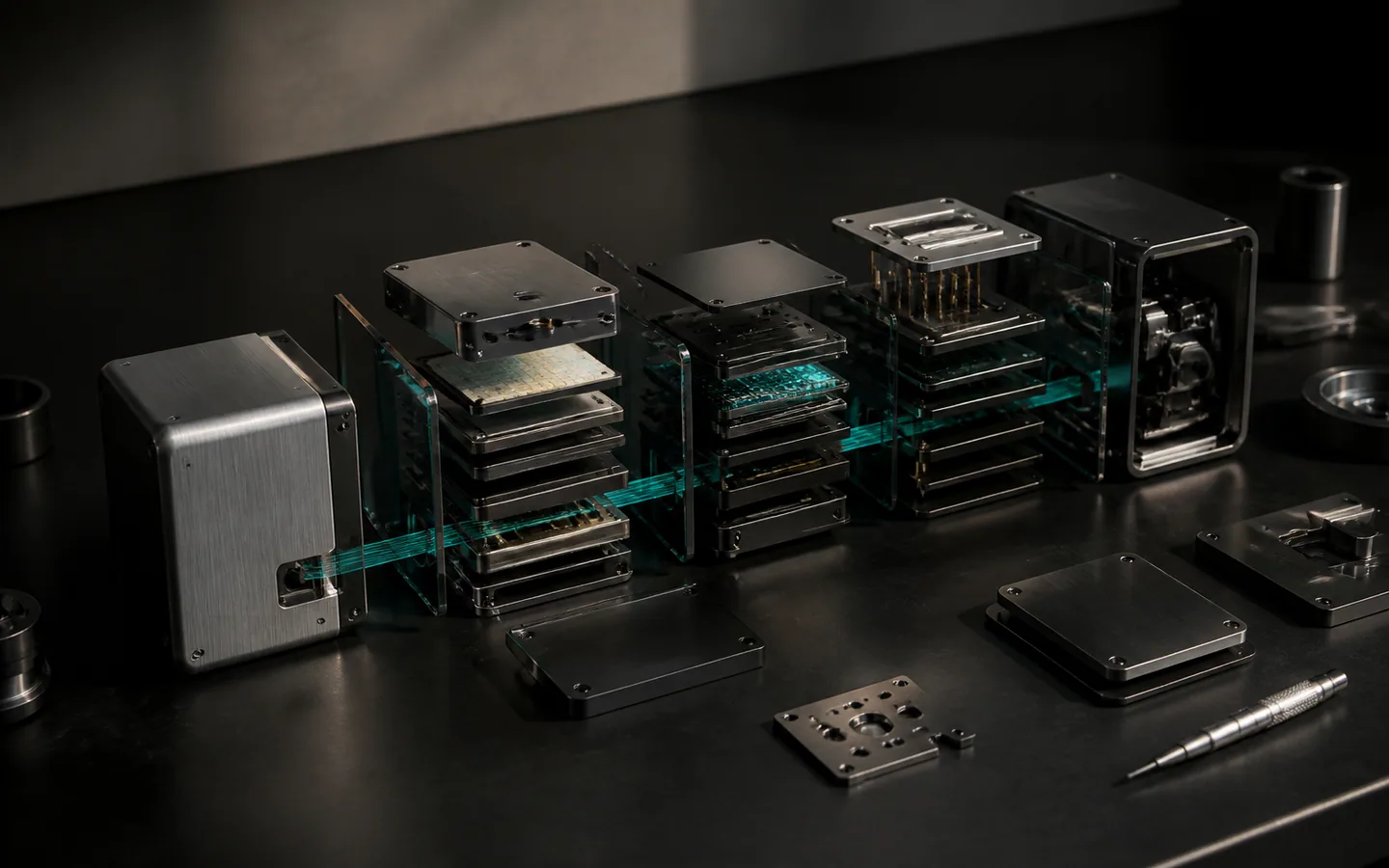
What this capability is designed to resolve.
A cross-functional product engagement spanning the commercial problem, user experience, AI and software architecture, quality evidence, launch readiness, and post-launch ownership required by the agreed scope.
- 01Founders and product leaders shaping a new AI-native product or capability.
- 02Enterprise teams creating an AI product for customers, partners, or an internal market.
- 03Teams with a compelling prototype that needs product, engineering, and operating discipline.
The product system stack
Product experience, application logic, intelligence, controls, and the operating model are designed as one releaseable system.
Product experience
The user journey, interface, feedback, and recovery behavior that make the intelligence usable.
Application system
APIs, data, identity, integrations, administration, and deterministic product logic.
Intelligence system
Models, retrieval, tools, context, evaluation, and task orchestration selected for the product.
Control system
Review, policy, observability, cost, failure handling, and release authority.
Operating model
Ownership, change process, support, provider dependencies, and post-launch responsibility.
What the system must be designed against.
- A broad feature list without a sharp customer or operating thesis.
- AI behavior treated as a hidden component instead of a product surface.
- Prototype architecture becoming the unexamined production architecture.
- No plan for evaluation, cost, exceptions, or model and provider change.
- A launch date without an owner for the system after launch.
What the engagement is shaped to make clearer.
- A product scope tied to a real customer and business decision.
- A coherent experience across software, AI behavior, and human control.
- Release decisions grounded in documented evidence and limitations.
- Clear ownership for the product after the first launch.
Concrete system surfaces, not an abstract AI layer.
- Product framing, journey, interaction model, and measurable product hypotheses.
- AI and deterministic application architecture selected for the use case.
- Product interfaces, APIs, data flows, integrations, and administrative controls.
- Evaluation, review, observability, and release evidence for material behavior.
- Launch, handover, and optional continuing operations for the agreed system.
- 01
Clarify the customer, problem, commercial thesis, evidence, and constraints.
- 02
Design the narrowest product experience that can test the core value proposition.
- 03
Build the system in vertical slices that connect interface, intelligence, and operations.
- 04
Validate product behavior and limitations against written release criteria.
- 05
Launch, transfer, and evolve according to the agreed ownership model.
A delivery path with explicit artifacts and ownership.
- 01
Product framing
Engagement-defined
Align the customer problem, product thesis, constraints, evidence, and decision path.
- Product opportunity brief
- Experience and system hypotheses
- Recommended product sequence
- 02
Product & architecture design
Engagement-defined
Define the target experience, system boundaries, AI behavior, controls, and release evidence.
- Experience direction
- Architecture direction
- Delivery and validation plan
- 03
Build & validate
Engagement-defined
Implement vertical slices, test material behavior, and decide what is ready to release.
- Working product increments
- Evaluation and acceptance evidence
- Known limitations and launch decision
- 04
Launch & evolve
Engagement-defined
Release the approved product, establish ownership, and plan the next evidence-driven increment.
- Launch and handover
- Operating documentation
- Optional evolution or operations scope
How success is interpreted.
- Product value
- The customer or business behavior that indicates the product is solving the intended problem.
- Task quality
- The agreed measures for whether the product's material AI-enabled behavior is acceptable.
- User recovery
- How clearly the product handles uncertainty, failure, correction, and escalation.
- Operating viability
- The cost, support, provider, and ownership signals needed to sustain the product.
Designed for an operating life.
Cyryx connects advisory, product thinking, engineering, and operations so the system can be understood after the first release. Our product work in MAAX Studio informs that perspective without imposing a universal architecture on client work.
Team structure, scope, timing, commercial terms, code and intellectual-property treatment, third-party costs, acceptance, support, and post-launch responsibility are defined for each engagement.
What decision-makers ask us.
Q.Where does Cyryx enter the product lifecycle?
Cyryx can begin with product framing, join after an internal concept exists, or help recover a prototype that lacks an architecture and operating path. The first phase is shaped around the evidence already available.
Q.Do you build the full product or augment an internal team?
Either model may fit. Team structure, responsibilities, decision authority, and handover are agreed before delivery begins.
Q.How are code and intellectual property handled?
Ownership, licensing, reusable Cyryx components, third-party services, data, and deliverables are defined in the engagement agreement. No universal transfer model is assumed.
Q.What happens after launch?
The product can be transferred to the client team or operated with Cyryx under a separately defined scope covering the selected systems, responsibilities, and response expectations.